

Biofuels Market Growth Accelerates as Global Decarbonization Efforts Gain Momentum
Explore the latest trends, growth drivers, opportunities, challenges, and future outlook of the global Biofuels Market. Learn how renewable fuels are transforming transportation, aviation, and industrial energy systems.
 PramodKr
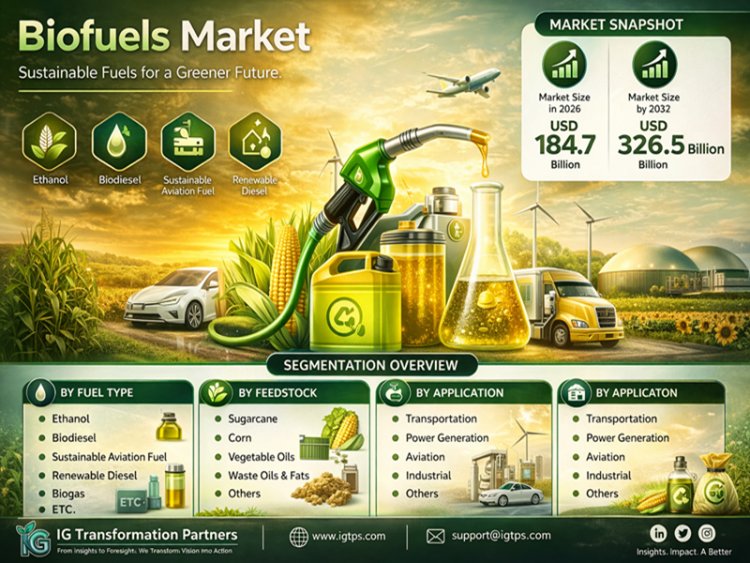
Biofuels Market: Driving the Future of Sustainable Energy
The global energy landscape is undergoing a significant transformation as governments, industries, and consumers seek cleaner alternatives to fossil fuels. Among the most promising renewable energy solutions, biofuels have emerged as a critical component of global decarbonization strategies. Produced from organic materials such as agricultural crops, waste biomass, and algae, biofuels offer a lower-carbon alternative to conventional gasoline, diesel, and aviation fuels.
As countries work toward achieving net-zero emissions targets, biofuels are playing an increasingly important role in reducing greenhouse gas emissions, enhancing energy security, and supporting rural economic development. The growing adoption of renewable fuels across transportation, aviation, marine, and industrial sectors is expected to drive substantial growth in the global biofuels market over the coming years.
What Are Biofuels?
Biofuels are renewable fuels derived from biological sources, including plant materials, agricultural residues, animal waste, and other organic feedstocks. Unlike fossil fuels, biofuels can be replenished through natural biological processes, making them a more sustainable energy source.
The primary types of biofuels include:
Bioethanol
Produced mainly from corn, sugarcane, and other sugar-rich crops, bioethanol is widely blended with gasoline to reduce emissions and improve fuel efficiency.
Biodiesel
Derived from vegetable oils, animal fats, and recycled cooking oils, biodiesel serves as a renewable substitute for conventional diesel fuel.
Renewable Diesel
Manufactured through advanced processing technologies, renewable diesel offers compatibility with existing diesel engines and infrastructure.
Sustainable Aviation Fuel (SAF)
A rapidly growing segment designed to reduce aviation sector emissions while maintaining performance standards.
Advanced Biofuels
Produced from non-food feedstocks such as algae, agricultural waste, and forestry residues, advanced biofuels address concerns related to food security and land use.
Key Drivers of Biofuels Market Growth
Increasing Focus on Carbon Emission Reduction
Climate change mitigation remains one of the strongest drivers for biofuel adoption worldwide. Governments are implementing stringent environmental regulations and carbon reduction targets, encouraging industries to transition toward renewable energy sources.
Biofuels can significantly reduce lifecycle greenhouse gas emissions compared to fossil fuels, making them a vital tool in achieving national and international climate objectives.
Supportive Government Policies
Many countries have introduced biofuel blending mandates, renewable fuel standards, tax incentives, and production subsidies to encourage market growth.
Examples include:
- Renewable Fuel Standard (RFS) in the United States
- Renewable Energy Directive (RED II) in Europe
- Ethanol blending programs in Brazil and India
- Sustainable aviation fuel initiatives globally
These regulatory frameworks continue to create favorable conditions for investment and market expansion.
Growing Energy Security Concerns
Rising geopolitical tensions and fluctuations in crude oil prices have highlighted the importance of diversifying energy supplies. Biofuels provide countries with an opportunity to reduce dependence on imported fossil fuels while strengthening domestic energy production capabilities.
Expansion of Sustainable Aviation Fuel
The aviation sector faces increasing pressure to reduce emissions. Sustainable aviation fuel has emerged as one of the most viable solutions for decarbonizing air travel.
Major airlines, airports, and aircraft manufacturers are investing heavily in SAF production and adoption, creating significant opportunities within the biofuels market.
Emerging Trends in the Biofuels Market
Development of Second-Generation Biofuels
Second-generation biofuels utilize agricultural residues, forestry waste, and non-food biomass as feedstocks. These technologies help overcome concerns related to food-versus-fuel debates while improving sustainability performance.
Increasing Investment in Advanced Technologies
Innovations in biotechnology, enzyme engineering, and feedstock conversion processes are enhancing production efficiency and reducing costs.
Emerging technologies include:
- Cellulosic ethanol production
- Algae-based biofuels
- Gasification and pyrolysis systems
- Biomass-to-liquid conversion technologies
Corporate Sustainability Commitments
Large corporations across transportation, logistics, manufacturing, and aviation sectors are integrating biofuels into their sustainability strategies. Corporate demand is expected to become a major growth driver over the next decade.
Expansion of Circular Economy Models
The use of waste oils, agricultural residues, and industrial by-products as feedstocks supports circular economy principles while reducing environmental impacts.
Challenges Facing the Biofuels Industry
Despite strong growth prospects, several challenges remain:
Feedstock Availability
Securing a consistent and sustainable supply of feedstocks remains a critical concern for producers.
Production Costs
Advanced biofuel technologies often require significant capital investment and may face cost competitiveness challenges compared to conventional fuels.
Infrastructure Limitations
Fuel distribution networks, blending facilities, and storage infrastructure require ongoing investment to support large-scale biofuel adoption.
Regulatory Uncertainty
Changes in government policies, subsidies, and environmental regulations can influence market dynamics and investment decisions.
Regional Market Outlook
North America
North America remains one of the largest biofuels markets globally, supported by strong policy frameworks, extensive production capacity, and increasing renewable fuel demand.
Europe
Europe continues to lead in sustainable fuel adoption, driven by ambitious climate targets and renewable energy mandates.
Asia-Pacific
Rapid industrialization, growing transportation demand, and government initiatives in countries such as China, India, Indonesia, and Thailand are fueling market expansion.
Latin America
Brazil remains a global leader in ethanol production and consumption, benefiting from its well-established sugarcane industry.
Middle East & Africa
Emerging renewable energy strategies and investments in sustainable fuels are creating new opportunities across the region.
Future Outlook
The future of the biofuels market appears highly promising as governments and industries intensify efforts to achieve sustainability goals. Advances in feedstock utilization, production technologies, and carbon reduction initiatives are expected to drive continued innovation and market growth.
The integration of biofuels into transportation, aviation, marine, and industrial sectors will play a critical role in supporting the global transition toward a low-carbon economy.
Conclusion
Biofuels have become an essential component of the global renewable energy ecosystem. Their ability to reduce greenhouse gas emissions, enhance energy security, and support sustainable development positions them as a key solution in the fight against climate change.
As technological advancements continue to improve efficiency and scalability, the biofuels market is expected to experience significant growth, offering attractive opportunities for producers, investors, policymakers, and end-users worldwide.
Access the Full Market Report
For comprehensive market forecasts, competitive intelligence, growth opportunities, regional analysis, and industry insights, visit: https://www.igtps.com/report/biofuels-market
Frequently Asked Questions (FAQs)
1. What are biofuels?
Biofuels are renewable fuels produced from biological materials such as crops, agricultural waste, algae, and organic residues.
2. What are the major types of biofuels?
The major types include bioethanol, biodiesel, renewable diesel, sustainable aviation fuel, and advanced biofuels.
3. What factors are driving biofuels market growth?
Key drivers include climate change policies, renewable fuel mandates, energy security concerns, and growing demand for sustainable transportation fuels.
4. Which region dominates the biofuels market?
North America and Europe currently lead the market, while Asia-Pacific is expected to witness significant growth.
5. What is sustainable aviation fuel (SAF)?
SAF is a renewable fuel designed to reduce aviation emissions while maintaining compatibility with existing aircraft and infrastructure.
6. What challenges does the biofuels market face?
Challenges include feedstock availability, production costs, infrastructure requirements, and regulatory uncertainty.
7. Why are biofuels important for decarbonization?
Biofuels help reduce greenhouse gas emissions and provide renewable alternatives to fossil fuels across multiple sectors.












/cdn.vox-cdn.com/uploads/chorus_asset/file/25157482/236883_Epic_Vs_Google_10_CVirginia.jpg)


/cdn.vox-cdn.com/uploads/chorus_asset/file/25263748/DCD_Casey_Newton.jpg)